


November 18, 2026
4 Min Read
[Sassy_Social_Share title="Share With Your Network"]
Increasing global volatility is forcing corporate security to the top of the agenda for Canadian businesses.
“The business environment has become a lot riskier,” says Benjamin Kunde, Executive Vice-President at Interfor International, a U.S.-based investigative and security consulting firm that has had a presence in Canada for more than 50 years.
“The need for due diligence and for proactive intelligence has never been greater and it really is something we have never seen before,” adds Kunde, the Program Chair for Osgoode Professional Development’s upcoming program Corporate Security, Information Risk and the Modern Threat Landscape.
The half-day conference will proceed live on Jan. 28, with options to attend in person or online. Sessions will cover a broad range of topics, equipping attendees with a legal and operational understanding of cyber risks, physical security and intelligence functions.
According to Kunde, the breadth of the program reflects the extraordinary diversity of corporate security risks facing Canadian businesses at the moment, which could potentially include external attackers or internal thieves. Meanwhile, the strict national security regulations associated with the Investment Canada Act and the proliferation of economic sanctions related to conflicts in Ukraine and the Middle East mean every new transaction must be swept for hidden geopolitical landmines.
“Canadian companies taking in investment need to figure out whether the source of money is ultimately related to a sanctioned Russian oligarch or the Chinese state,” Kunde says. “Even inside Canada, you need to vet your business partners.”
Cyber risk trends
When it comes to cyber and other technology risks, Kunde’s co-Program Chair Omeed Arlani says the fundamental character of the threat landscape facing Canadian organizations has remained largely constant in recent years.
Instead, it’s an explosion in the volume of issues that has caused the biggest corporate security challenges as both bad actors and threat detectors take advantage of artificial intelligence to supercharge their output.
“The accessibility and prevalence of AI is giving them the ability to do things at a mass scale at a much faster rate. Back in the day, you would have a third-party provider come in and do a threat assessment and maybe they would find five or ten issues with a platform that you could button up quickly. Now you get 50,” says Arlani, whose day job is Vice President, Enterprise Legal at the Canadian pension plan OMERS. “It adds a burden on internal teams, because you have to react as fast as they do, in order to ensure that your systems are secure.”
Not all risks are as high-tech, according to Interfor International’s CEO Don Aviv, another speaker at OsgoodePD’s corporate security program. He says that more traditional concerns regarding physical and personal security are trending upwards, noting that one of the firm’s clients is preparing to exit the crypto business as a result of criminal threats and actual attacks against prominent executives in the field.
Political polarization on the rise online
In recent years, increasing political polarization online has boosted demand for the firm’s social media monitoring service, while also changing its nature significantly, Aviv adds.
“In the past, it was more of a brand management service for tracking negative sentiment,” he explains. “Now you get people mentioning how they might harm someone if they’re ever near them. It has changed the landscape for us.”
In addition to private practice lawyers and corporate officers, Arlani says the program should be of particular interest to in-house counsel looking to build some of the legal (and non-legal) skills they need to help their employers get through a corporate security crisis – or to avoid one in the first place.
“It’s going to be a team that gets you through,” he says. “A lot of the time, the role of the lawyer isn’t necessarily entirely about legal advice. Because we tend to see a lot of different aspects of the organization, lawyers are a voice in the room who can guide people, providing judgement and business-minded practical advice.”
In the spirit of practical learning leadership that characterizes OsgoodePD’s approach, the corporate security program will make heavy use of interactive components, including case studies and scenario-based exercises.
Aviv says attendees should arrive ready to engage with each other, as well as the expert panellists leading the sessions.
“We’ve all been in classroom settings where the speaker just drones on and on, but that’s not what is happening here,” he says. “I like to be argued with. We’re going to challenge people to think creatively and ask tough questions, because that’s the best way to really hash out and drill down into complicated topics.”
Want to learn more about Corporate Security, Information Risk and the Modern Threat Landscape?
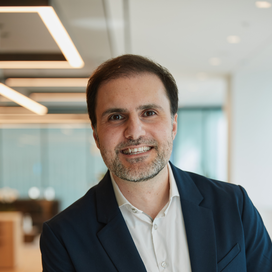
Omeed Arlani – Vice President, Enterprise Legal, OMERS
Co-Chair of Corporate Security, Information Risk and the Modern Threat Landscape
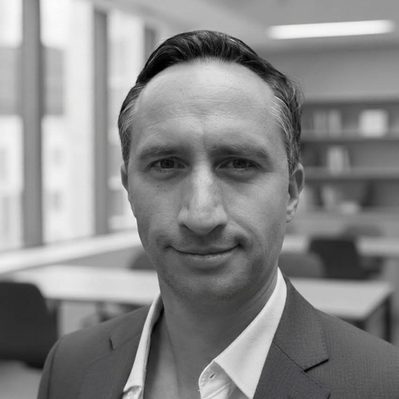
Benjamin Kunde – Executive Vice President, International Investigations, Interfor International
Co-Chair of Corporate Security, Information Risk and the Modern Threat Landscape