


Graeme Keirstead, KC, has practised law since 1992 and been involved in professional regulation since 1999. As Deputy Registrar and Chief Legal Counsel for the College of Physicians and Surgeons of British Columbia, he sits at the intersection of medicine, governance and public accountability every day. By the time he enrolled in Osgoode’s Professional LLM in Health Law, he had already spent decades in the regulatory sphere. The program offered an opportunity to step back from day-to-day practice and examine the broader system that shapes it.
“I looked at the curriculum and thought this would really create a much more comprehensive understanding of the system within which I’m working,” he says of enrolling in Osgoode’s Professional LLM in Health Law. The regulation of physicians, he explains, is only one part of a much larger, interconnected landscape and courses like pharmaceutical law addressed knowledge gaps that were directly relevant to the College’s prescription review program.
The program gave him something that’s difficult to find in practice: the time to pursue research that aligned directly with the issues on his desk, from physician misinformation to questions of access to care.
“It gave me a rare ability to spend untold hours researching a topic for work and engaging in a written response to things. It was a real blessing,” he says.
Equity and Indigenous-specific racism in healthcare delivery ran through much of his coursework and remain central to his work today. The College has partnered with Indigenous rights holders for years to decolonize its processes, including retiring the colonial elements of its crest.
“We take our responsibilities under the Truth and Reconciliation Commission calls to action and the In Plain Sight report very seriously. They help inform policy and ethics decisions,” he says.
That commitment recently took him to Montreal, where he spoke at an international conference on practice standards for physicians treating incarcerated patients in administrative segregation. His presentation drew on the Mandela Rules and addressed the disproportionate incarceration of Indigenous people in Canada.
“If we don’t have the jurisdiction to address critical issues upstream to keep Indigenous people from being overrepresented in prisons, the least we can do is ensure that our licensees are exercising their ethical responsibilities to make sure people are not suffering under their watch.”
Privacy, accountability and public trust formed another throughline. As a public body, the College operates under British Columbia’s Freedom of Information and Protection of Privacy Act, one of the country’s more stringent privacy regimes.
“Modern health regulation really thrives on data and personal health information needs to be dealt with for patient care, public health and research purposes in ways that are carefully managed in the public interest,” he says.
That same scrutiny now extends to artificial intelligence in clinical settings, which he describes as a double-edged sword: freeing physicians to engage more personally with patients while raising questions about where patient data ends up. “We’ve put provisional guardrails around it, but I think it’s all going to come down to regulation.”
Graeme’s years at the Law Society of British Columbia, where he regulated his own profession before moving into health regulation, also shaped his views on administrative fairness. The LLM gave him the opportunity to examine those principles more deeply.
“I have a very zealous approach to disclosure. I think we should be disclosing everything to the subject of a complaint,” he says. “Fairness and natural justice both pivot on truly understanding the case you have to meet in order to be able to respond to it.”
Professionals in both law and medicine build their identities around their work, he notes, and any process that could take that away must give them every opportunity to respond and to engage.
Graeme credits the program’s faculty as much as its curriculum, singling out instructors like Tracy Bailey, now a judge in Alberta. His enthusiasm for the experience remains unmistakable.
“I loved it. It was fascinating,” he says. The questions he explored through the LLM continue to shape his thinking as health regulation evolves alongside new legal, technological and ethical challenges.
Wondering if the Professional LLM is right for you? Get information on course requirements, application dates, tuition and more!
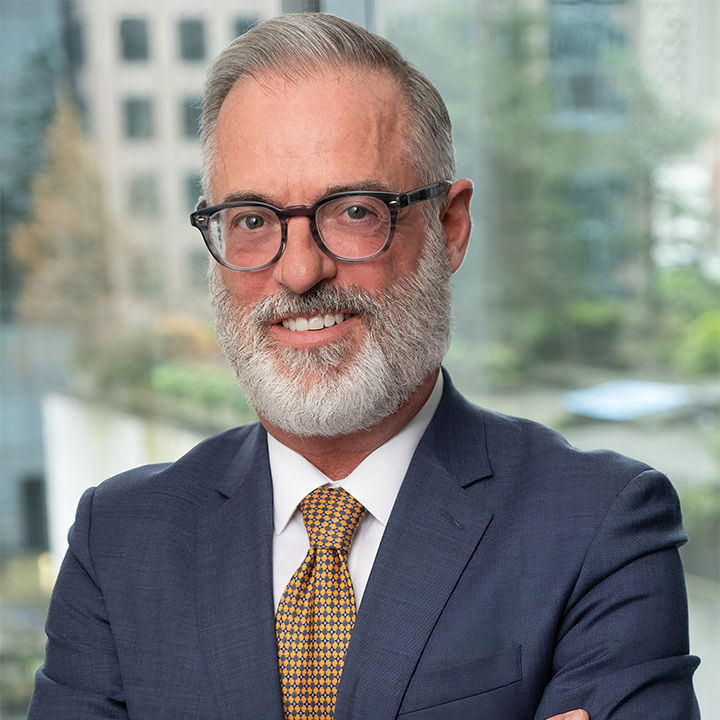
Graeme Keirstead, KC – Deputy Registrar, Legal and Chief Legal Counsel, College of Physicians and Surgeons of British Columbia
Graduate of Osgoode’s Professional LLM in Health Law (2023)