
Disability & Health Law is an elective course in Osgoode’s Professional LLM in Health Law. The course examines how disability and health intersect with legal systems, policy frameworks, and social attitudes. Students explore how law can function both as a tool for advocacy and inclusion, and as a mechanism that has historically reinforced barriers for people with disabilities.
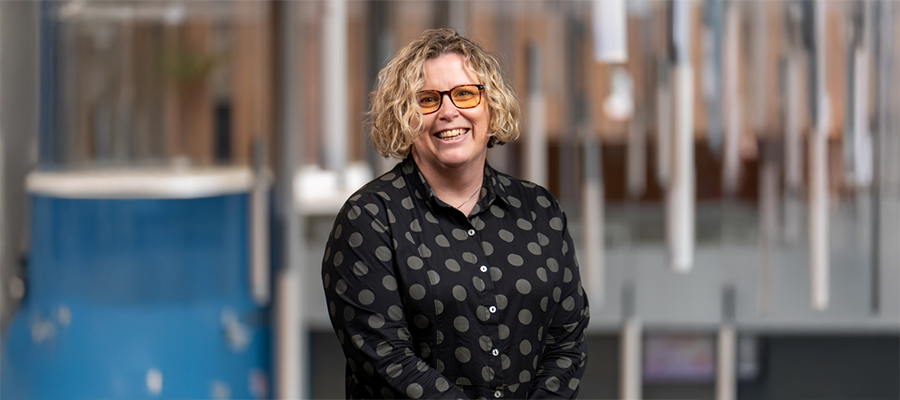
The course is taught by Marian MacGregor, executive director of the Centre for Human Rights, Equity & Inclusion at York University. She previously served as an equity advisor with the Law Society of Ontario and as director of Osgoode Hall Law School’s Community and Legal Aid Services Program (CLASP), where she founded the Disability Law Intensive. Earlier in her career, she worked for more than a decade in community legal clinics supporting low-income individuals in areas such as human rights, housing, social assistance, and employment law.
Understanding the relationship between disability, health, and law has become increasingly important for legal practice and the justice system. MacGregor notes that there is growing recognition that providing legal services to people with disabilities requires a deeper understanding of how laws intersect with health systems and social structures. Disability and health are closely connected, she explains, but the course also encourages students to challenge the assumption that disability should always be understood solely through a medical lens.
“We talk about how disability can be reframed not only as a health-related issue,” she explains. While health systems often play a role in defining disability, they do not tell the whole story. Law can serve as a powerful tool for advocating for the rights of people with disabilities, but it has also been used in ways that have marginalized or constrained those rights. The course explores both dimensions, examining how legal frameworks shape the lived experiences of people with disabilities.
Students engage with a range of contemporary legal and ethical issues where disability and health intersect. One example is the ongoing debate around medical assistance in dying (MAID). Although MAID is not exclusively about disability, MacGregor notes that it has had a profound impact on the disability community and has sparked complex conversations about autonomy, dignity, and societal perceptions of disability.
The course also examines questions of consent, decision-making, and capacity within health law. Decisions about who has the authority to make medical choices often sit within healthcare systems, raising important legal questions about autonomy and support. As MacGregor notes, many people rely on advice and guidance from others when making major life decisions. Yet individuals labeled with intellectual or mental health disabilities are often treated differently when it comes to supported decision-making.
In addition to legal doctrine, the course encourages students to rethink broader assumptions about disability. MacGregor emphasizes that disability is something most people will encounter at some point in their lives – whether temporarily, through aging, or through family and community relationships. Recognizing this reality can fundamentally shift how people think about disability and inclusion.
Because the course brings together lawyers and professionals from fields such as healthcare, social services, and policy, classroom discussions reflect a wide range of perspectives. Many students arrive with professional training that frames disability primarily through a medical or healthcare lens. MacGregor sees the classroom as an opportunity to both draw on and challenge those perspectives, encouraging students to examine how legal frameworks shape the way disability is understood and addressed. Drawing on the ideas of educator Paulo Freire, she notes that “a good class should have a mutual exchange between instructor and student,” where participants learn not only from the readings and lectures but also from each other’s professional and lived experiences.
Students who come to the course without a legal background are also well prepared by the time they enroll. Because the class is offered as an elective within the program, participants have already completed foundational courses that provide the legal context needed to engage with the material. From there, the course focuses on expanding how students think about disability and health law, encouraging them to connect legal frameworks with their own professional experience and evolving understanding of disability.
A central feature of the course is ensuring that the voices of people with disabilities are present in the learning process. MacGregor incorporates podcasts, videos, and other materials that feature individuals speaking directly about their experiences. This approach helps ensure that disability is not discussed only from a clinical or legal perspective but also through the voices of those whose lives are most directly affected.
The course also emphasizes collaborative learning and reflection. Students work together on group assignments and presentations that require them to analyze readings and develop critical perspectives on key issues. The final reflection assignment invites students to consider how their understanding of disability and health law has evolved over the course.
By the end of the course, students develop the ability to critically analyze how legal frameworks shape disability rights in healthcare and beyond. They learn to apply legal concepts through a critical lens, synthesize complex legal and social perspectives, and reflect on how their professional and personal experiences intersect with the issues explored in the course. For MacGregor, the goal is not simply to teach legal doctrine, but to help students rethink how disability, health, and law interact in society.
Wondering if the Professional LLM in Health Law is right for you? Get information on course requirements, application dates, tuition and more!