

Within a year of his 2016 call to the bar, Anthony Sangiuliano had already covered all the bases of constitutional law.
While studying for his law degree, Sangiuliano spent his summers working on labour arbitrations and class actions at a union-side labour law firm, before completing his articling at Ontario’s Ministry of the Attorney General, in its constitutional law branch.
“Labour law on the union side implicates a lot of human rights issues and when I was working for the government, I ended up on the opposite side of those claims. Then I clerked at the Court of Appeal, which was neither side and learned about the need for impartiality,” Sangiuliano says. “I’m grateful for that variety, because it helped me realize the importance of being able to step into different shoes as needed and understand the perspectives of people coming to the law from very different places.”
That approach is still reflected in Sangiuliano’s academic scholarship and teaching style, as students in his Equality Rights class – an elective course on Osgoode’s part-time Professional LLM in Constitutional Law – will discover this summer.
“I’m very conscious about trying to present both sides of controversial issues as provocatively and forcefully as possible,” Sangiuliano explains. “Students sometimes tell me they have no idea what I think about a particular issue. I say to them: ‘that’s the point. I don’t want to talk about my thoughts; I want to hear yours.’”
“When they leave my class, I want them to have developed their ability to critically reflect on the material and come up with their own view. That’s more important than memorizing content,” he adds.
Sangiuliano’s recent hiring as Assistant Professor at Osgoode was a homecoming of sorts, a decade after his graduation from the school’s J.D. program. In fact, his new colleague and official faculty mentor, Professor Ben Berger, also taught Sangiuliano’s first-year criminal law class during his original stint at Osgoode.
“I remember asking him on my first day in criminal law whether I should be doing a PhD. He told me to focus on my first year and we could talk about it again when I was done, which was good advice,” Sangiuliano says.
Sangiuliano would eventually earn a PhD in philosophy at Cornell University, but always kept one foot firmly in the legal world, combining his studies with work as a research lawyer and law school instructor. He is currently Co-Director of Osgoode’s JD/MA in Philosophy Joint Program and an Associate Member of the Graduate Program in Philosophy at York University.
In the Equality Rights course, Sangiuliano and his co-instructor – Constitutional Law LLM Program Director Faisal Bhabha – will explore in detail with their students the rights protected by s. 15 of the Charter, with topics including the origins of the language in its text, theories of equality, remedies available for violations and the role of litigation in furthering progressive goals. The course will also survey litigation under provincial and federal human rights codes and special topics including racial profiling, affirmative action and algorithmic bias.
Sangiuliano’s academic work on constitutional law was recently cited by Supreme Court of Canada Chief Justice Wagner in his concurring opinion in Quebec (Attorney General) v. Kanyinda, in which the nation’s top court concluded that the Quebec government’s exclusion of refugee claimants from subsidized daycare had a disproportionate adverse impact on women refugee claimants.
Sangiuliano has also consulted on Supreme Court interventions by a number of advocacy groups and says it’s an exciting time to be involved in the field.
“Our understanding of equality law is evolving pretty significantly,” he says, pointing in particular to developments in the U.S., where dissenting voices have posed significant challenges to our conventional conceptions of discrimination in both the political and legal discourse around equality rights.
For example, one of Vice President JD Vance’s final acts in the U.S. Senate was to introduce the Dismantle DEI Act, with the stated aim of eliminating all federal DEI programs.
Closer to home, four University of British Columbia professors recently challenged their employer in court, alleging that its use of Indigenous land acknowledgements, promotion of diversity, equity and inclusion initiatives and statements on the Israeli-Palestinian conflict are in violation of the university’s governing legislation.
“These sorts of debates are becoming more common in the public eye now,” Sangiuliano says. “We offer students an opportunity to reflect on these developments, understand what the prevailing winds are and the extent to which these challenges might be successful or not, both in terms of the law and the public discourse.”
Wondering if the Professional LLM in Constitutional Law is right for you? Get information on course requirements, application dates, tuition and more!
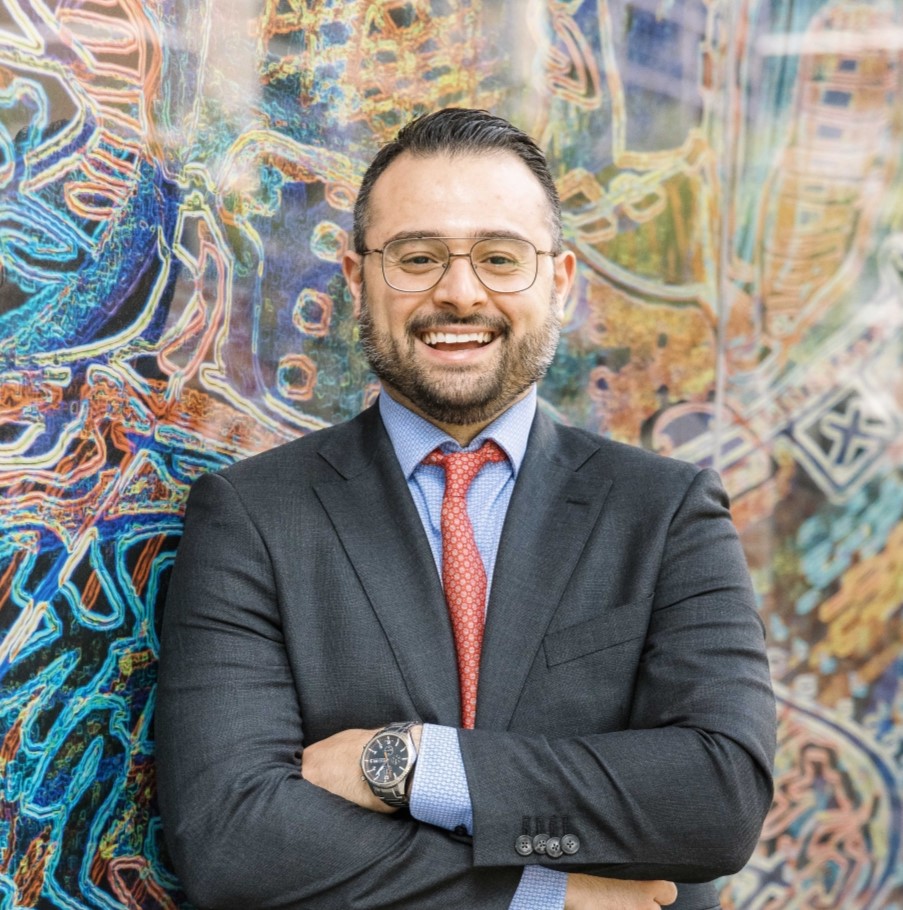
Anthony Sangiuliano
Instructor of Equality Rights class – an elective course in Osgoode’s part-time Professional LLM in Constitutional Law.